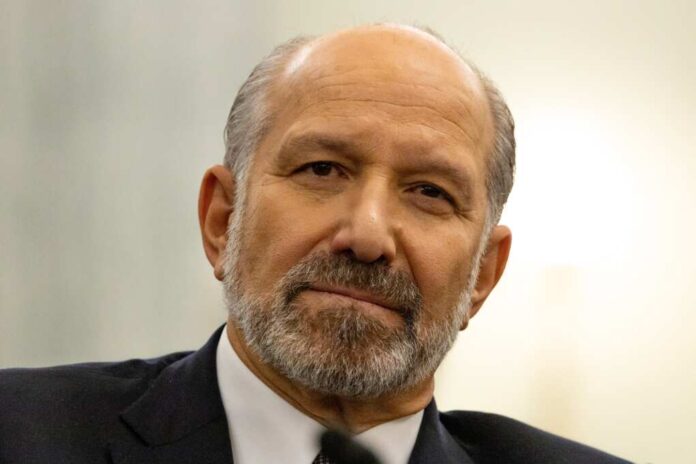
Commerce Secretary Howard Lutnick confronted the globalist elite at the World Economic Forum in Davos, declaring that decades of their failed policies have devastated American workers and weakened the United States.
Story Highlights
- Lutnick told Davos elites that globalization has failed the West and America, drawing audible jeers from the audience
- The Commerce Secretary defended Trump’s “America First” model as prioritizing domestic manufacturing, energy independence, and worker-centric growth
- US tariff policies have already reduced trade deficits and boosted exports, contradicting globalist predictions of economic disaster
- Foreign panelists pushed back with calls for multilateral coordination, highlighting the clash between national sovereignty and global governance
Lutnick Challenges the Davos Consensus
Howard Lutnick confronted the World Economic Forum’s globalist orthodoxy on January 20, 2026, telling assembled elites that their cherished model has destroyed Western prosperity. Speaking on a panel alongside UK Chancellor Rachel Reeves and Canadian Finance Minister François-Philippe Champagne, Lutnick stated bluntly that “globalization has failed the West and the United States of America.” His remarks sparked visible discomfort in the room, with the volume rising as attendees reacted to his direct challenge. The Commerce Secretary framed Trump’s policies as a necessary correction after decades of offshoring jobs and weakening American industry.
America First Delivers Economic Results
Lutnick backed his critique with concrete evidence of policy success. The Trump administration’s tariffs and trade renegotiations have reduced both trade and budget deficits while increasing exports and domestic investment. When panelists criticized tariffs as economically destructive, Lutnick pointed to rising stock markets as proof that investors understand the long-term benefits. He emphasized that “America First” represents a worker-focused alternative to globalism, prioritizing domestic manufacturing and energy independence. This approach challenges the WEF’s stakeholder capitalism model, which has dominated international economic policy since the forum’s founding in 1971.
Sovereignty Versus Global Governance
The panel exposed fundamental disagreements about economic organization. Reeves and Champagne advocated for G7 coordination and reduced trade barriers, representing the multilateral approach favored by international institutions. China’s representative rejected tariffs entirely, pushing domestic demand expansion instead. Lutnick countered that strong national economies enhance global stability rather than undermining it, arguing that America strengthens allies through its economic resurgence. He predicted that diplomatic discussions would resolve tensions, dismissing fears of unified European retaliation. This position reflects conservative principles of national sovereignty and limited international entanglement, rejecting the globalist push for supranational economic governance.
Reshaping International Trade Architecture
The confrontation signals a broader shift toward what officials call “securomics”—prioritizing economic security and resilience over efficiency gains from global supply chains. Trump administration policies have already produced bilateral trade agreements with the EU, India, and South Korea, replacing the multilateral frameworks that dominated previous decades. US workers benefit from manufacturing jobs returning home, though foreign exporters face adjustment costs from tariffs. The long-term implications challenge the WEF’s vision of integrated global markets, potentially fragmenting trade into regional and bilateral arrangements. For Americans frustrated by decades of job losses to foreign competition, Lutnick’s message offered vindication that nationalist economic policies can succeed where globalism failed.
🚨 GLOBALISM JUST DIED IN DAVOS
Howard Lutnick just walked into the lion’s den — and told the World Economic Forum exactly what they didn’t want to hear.
“Globalism has failed.”
Not whispered.
Not softened.Declared — on their own stage.
He dismantled the entire WEF doctrine… pic.twitter.com/PUzOe0XK7e
— Jim Ferguson (@JimFergusonUK) January 21, 2026
President Trump followed Lutnick to Davos on January 21, continuing the administration’s challenge to global elites. The Commerce Secretary’s willingness to directly confront the WEF’s consensus demonstrates that this administration will not apologize for putting American interests first, even in the heart of globalist territory. The audible discomfort in the room revealed how threatened the international establishment feels when forced to defend policies that have demonstrably harmed Western workers for their benefit.
Sources:
Davos WEF 2026 Coverage – EW Magazine
Live from Davos 2026: What to Know on Day 2 – World Economic Forum
Howard Lutnick Davos Speech Prompts Walkout – The Independent
Why the Trump Administration Is Going to Davos – US Department of Commerce