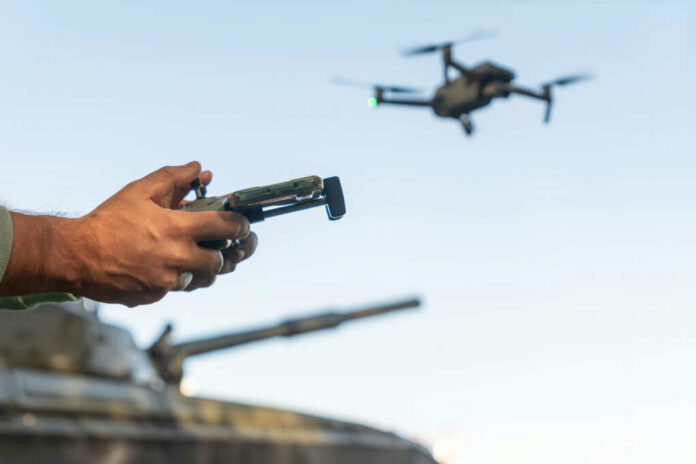
More than 300 drones have already been seized near World Cup stadiums, raising serious questions about airspace safety and government power.
Story Snapshot
- Federal agencies say over 300 drones have been confiscated near U.S. World Cup sites.
- Temporary flight bans reach three miles out from stadiums, covering entire neighborhoods.
- Operators face fines up to $100,000, possible jail time, and permanent drone seizure.
- No public evidence shows seized drones carried weapons or caused actual harm.
World Cup Drone Seizures Surge Past 300 Nationwide
Federal authorities report that more than 300 drones have been seized near 2026 FIFA World Cup stadiums since the tournament began on June 11.[5] The Transportation Security Administration says these seizures happened around host venues across the country, from Los Angeles and Dallas to Seattle and New Jersey.[4][5] The Federal Bureau of Investigation has set up special teams at stadiums and fan zones to locate and intercept drones that enter restricted airspace during match days.[5]
Local reports back up the national numbers with city-level details. In Seattle, the Federal Bureau of Investigation office says agents seized 11 drones flying near the stadium during the USA versus Australia match, after operators violated a broad “no drone zone” over much of the city.[1] Another report notes that 8 drones were seized and 2 pilots arrested during a different World Cup match there, with 5 more drones taken at an earlier game.[2][6] Around Atlanta’s stadium, federal officials say they have already seized dozens of drones since the start of the tournament.[1]
How Far Do These No-Drone Zones Really Reach?
For every World Cup stadium, the Federal Aviation Administration has imposed temporary flight restrictions that ban drones within a three‑nautical‑mile radius and up to 3,000 feet above the ground on match days.[2][5] These bans apply not only over the stadiums but also over nearby streets, homes, and parks. In Seattle, television coverage explains that the restrictions reach as far as Gasworks Park, the Interstate 90 bridge, the Georgetown neighborhood, and parts of West Seattle, turning large areas of normal city life into no‑fly zones for hobby pilots.[6]
The Federal Aviation Administration says these rules apply to all types of drone flyers. Commercial pilots with certificates lose their normal approvals when a flight restriction is active, and recreational flyers are also barred.[3][5] Federal agencies advise drone owners to check the flight restriction maps before every flight. Apps like B4UFLY and the agency’s online tools show these zones, but sudden layers of new rules can easily confuse average users who are used to flying in the same places without trouble.[1][3]
Penalties Are Harsh, But Evidence of Real Threats Is Thin
Federal officials warn that breaking a World Cup flight restriction can be very costly. According to enforcement notices and Justice Department releases, violators risk civil fines that can reach tens of thousands of dollars and criminal fines up to $100,000, along with as much as a year in prison and seizure of their drones.[5][13] In Kansas City, eight drones were intercepted during events at the stadium and fan festival, leading to seizure of the aircraft, violation notices, and several criminal citations under these temporary rules.[13]
Despite the heavy penalties, public reports show no clear cases where seized drones carried weapons or caused physical harm. National coverage citing event officials notes that there has been no indication so far that confiscated drones were part of planned attacks or armed plots.[5] Most documented cases involve small consumer drones operated by individuals who may or may not have understood the complex temporary rules. Authorities still describe these flights as “dangerous and illegal” and urge the public to call the Federal Bureau of Investigation tip line to report any drone they consider suspicious.[19]
Safety, Civil Liberties, and the Growing Drone Crackdown
The core question is how to balance real stadium security with basic freedoms and property rights. Temporary flight restrictions are meant to stop careless pilots from interfering with aircraft or large crowds. However, the rules now stretch far beyond stadium walls into neighborhoods and parks where families live, work, and play.[2][6] Broad bans risk punishing responsible hobbyists and small business owners along with bad actors, especially when enforcement relies on seizure first and public explanation later.
There is also a transparency gap that should concern every citizen. Federal officials promote the headline number of “more than 300 drones seized,” yet they have not released a full breakdown by city or the total number of arrests and charges tied to these incidents.[5] Without clear data on who was targeted, why they flew, and what their drones were capable of, it is hard for the public to judge whether this crackdown is truly focused on security or drifting into unchecked surveillance and control of the skies over private property.
Sources:
[1] Web – 300 drones seized for flying around World Cup sites across U.S.
[2] Web – 11 drones seized by FBI Seattle at USA-Australia World Cup game
[3] Web – FBI busts illegal drones hovering over Seattle World Cup
[4] YouTube – FBI seized five drones during World Cup match on Monday
[5] Web – 11 drones seized by FBI Seattle at USA-Australia World Cup game
[6] Web – Authorities seized multiple drones during Friday’s World Cup match …
[13] Web – US has seized more than 50 drones near World Cup sites, DHS says
[19] Web – FBI Atlanta has now seized 21 drones from operators violating the …