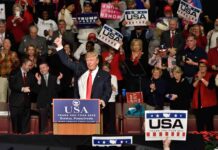
Macron’s strategic pivot at Davos signals a potential shift in global alliances, raising questions about Europe’s future relations with the U.S. and China.
Story Highlights
- Macron’s Davos speech emphasizes European strategic autonomy amid U.S. pressures.
- Trump’s renewed interest in Greenland creates diplomatic tensions with NATO allies.
- France seeks deeper economic engagement with China as a counterbalance.
- An upcoming EU summit will address these geopolitical dynamics.
Macron’s Strategic Moves at Davos
On January 20, 2026, French President Emmanuel Macron delivered a pivotal speech at the World Economic Forum in Davos. Asserting Europe’s independence, Macron addressed escalating U.S. trade pressures and geopolitical tensions. He emphasized the need for Europe to act as an independent player on the global stage, resisting U.S. tariffs and exploring economic opportunities with China. This positioning comes during France’s G7 presidency, allowing Macron to set the agenda for key global discussions.
Macron aims to balance U.S. pressures with opportunities in China, signaling openness to Chinese investments in Europe. He stated that Europe welcomes Chinese foreign direct investments in key sectors, provided they contribute to growth and technology transfer. This approach reflects a strategic hedging tactic, maintaining options with both global powers rather than aligning exclusively with one. It underscores Macron’s vision of a multipolar world where Europe can assert its autonomy and leverage its economic weight.
Trump’s Greenland Ambitions and NATO Tensions
Amid Macron’s strategic maneuvers, President Trump has renewed interest in acquiring Greenland, stirring tensions within NATO. The notion of U.S. territorial ambitions in Greenland has been met with European resistance, as evidenced by Macron’s remarks at Davos that no meetings with Trump on Greenland are planned. This situation highlights the diplomatic challenges Europe faces in balancing transatlantic security commitments with its economic interests.
Trump’s tariff threats further complicate the geopolitical landscape, pushing European leaders to reassess their trade relationships. Macron’s speech at Davos criticized the “endless accumulation of new tariffs,” framing aggressive U.S. trade policies as destabilizing. He emphasized Europe’s unwillingness to accept subordination to U.S. economic demands, highlighting the importance of maintaining European competitiveness and strategic autonomy.
Implications and Upcoming Developments
The European Union is set to hold an informal summit in February 2026, focusing on the dynamics between China, Europe, and the U.S. This meeting will be crucial in determining the extent to which Macron’s vision of European strategic autonomy gains support among EU members. The summit aims to address structural economic imbalances and promote multilateral cooperation, aligning with France’s G7 agenda.
🚨🔥BREAKING: Macron just delivered a direct rebuke of Trump-style strongman politics at Davos.
“We prefer respect to bullies. We prefer science to obscurantism. We prefer the rule of law and predictability.”
Then he made the pitch loud and clear:
“If you want stability,… pic.twitter.com/pOIUqvfu9x
— Brian Allen (@allenanalysis) January 20, 2026
Looking ahead, the success of Macron’s strategy depends on European unity and Chinese reciprocity. If Europe can effectively balance U.S. and Chinese pressures, it could emerge as a genuine third pole in global geopolitics. However, persistent U.S. pressure may push Europe to accelerate defense spending and strategic autonomy initiatives, potentially weakening NATO cohesion.
Sources:
Wikipedia: 2023 France-China Summit
Durango Herald: Greenland and Trump Tariffs at Davos
Le Monde: Macron Denounces U.S. Competition