
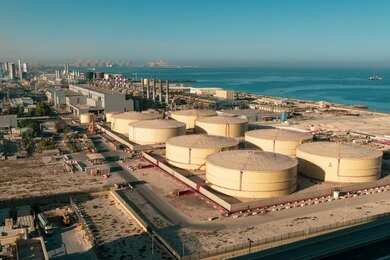
America’s emergency oil lifeline has been drained to levels not seen in decades, just as global conflict and supply risks are rising again.
Story Snapshot
- The U.S. Strategic Petroleum Reserve has fallen to roughly 365 million barrels after record drawdowns, its lowest range in about 40 years.
- Over 40–50 million barrels have been pulled in just a few months, with one recent week seeing a 9.1 million barrel drop.
- Washington committed to release 172 million barrels as part of a global 400 million barrel release led by the International Energy Agency.
- The reserve now holds barely a third of its physical capacity, raising serious questions about preparedness for the next real crisis.
How America’s Oil Safety Net Was Drained
Federal data show the United States Strategic Petroleum Reserve, the nation’s emergency crude stockpile, has plunged after a series of massive drawdowns over the last few years.[3][7] The reserve’s caverns along the Gulf Coast can hold about 714 million barrels, yet recent inventories have hovered in the mid-300 million barrel range, the lowest levels since the early 1980s.[3][5] That means barely one third of the government’s authorized emergency capacity is actually filled today.[3][5]
Energy analysts report that in just the two months leading into late May, more than 40 million barrels were withdrawn from the Strategic Petroleum Reserve, with one week alone seeing a 9.1 million barrel decline.[2] That weekly drop left the stockpile around 365 million barrels, confirming an unusually rapid pace of depletion for what is supposed to be a last-resort national security asset.[2] These withdrawals were layered on top of earlier sales that had already driven inventories sharply lower.[3]
The International Energy Agency Push and Giant U.S. Commitments
Reports from financial and policy analysts describe how the United States agreed in March to release 172 million barrels of crude from the Strategic Petroleum Reserve as part of a coordinated action by member countries of the International Energy Agency.[2][1] That international plan called for roughly 400 million barrels of emergency oil to be pushed into the market to offset supply disruptions tied to war in Iran and choke points near the Strait of Hormuz.[2] So far, the United States has delivered only a portion of that pledge, but the commitment itself equals roughly forty percent of recent reserve inventories.[1][2]
The Department of Energy notes that the Strategic Petroleum Reserve was created after the 1970s OPEC embargo to protect Americans from exactly these kinds of geopolitical shocks, not to serve as a routine price lever or budget tool.[3][5][6] Official Energy Department “quick facts” explain that the caverns can release oil at a maximum of 4.4 million barrels per day, with crude reaching the market about thirteen days after a presidential decision.[5] At that maximum rate, a 172 million barrel release would take close to 120 days, underscoring how large this coordinated drawdown really is compared with typical emergency actions.[2][5]
From Energy Security Buffer to Political Shock Absorber
Historical records compiled by the Department of Energy show that Washington has increasingly used the reserve not just for true emergencies, but also to satisfy legislative mandates and short-term policy goals.[4][5] Congress has repeatedly ordered sales to raise revenue, and recent administrations have turned to unprecedented releases to cushion gasoline prices following foreign conflicts and supply disruptions.[3][4][5] Analysts point out that the 2022 sale of 180 million barrels marked the largest release in the history of the Strategic Petroleum Reserve and pushed stocks to their lowest level in forty years.[3]
American crude oil and petroleum inventories have fallen to their lowest level in more than two decades as the conflict with Iran continues to disrupt global energy markets, FT writes.
Total U.S. stocks of crude and refined products dropped by 10.6 million barrels last week to… pic.twitter.com/RuoXit1t2Q
— Global Report (@Global_ReportHQ) June 3, 2026
Energy officials emphasize that the United States still meets the International Energy Agency requirement to hold at least ninety days of net import protection when public and private stocks are combined.[5] At the end of 2025, the Strategic Petroleum Reserve alone represented roughly 125 days of import protection, thanks in part to lower net import levels compared with past decades.[5] Yet critics warn that these paper compliance metrics do not erase the reality that America’s dedicated federal emergency cushion has been significantly thinned at a time of war, shipping threats, and continued global instability.[1][2][7]
What a Thinner Reserve Means for Families and the Economy
Energy market histories make clear that when major crises hit—whether war in the Middle East, a refinery outage, or a hurricane in the Gulf—oil prices can spike in days while government responses take weeks.[4][5][6] The Strategic Petroleum Reserve’s drawdown capability of 4.4 million barrels per day is designed to bridge exactly that gap, but only if the caverns are adequately filled beforehand.[5][6] With current stocks far below past norms, any future disruption could force sharper price shocks at the pump before the government has room to act decisively.[2][3]
Federal statistics indicate that filling the reserve to its original design levels would require hundreds of millions of additional barrels, implying years of steady purchases or exchanges if policymakers decide to rebuild the buffer.[3][5][6] Department of Energy materials explain that restocking can occur through direct purchases or “exchange” deals, where refiners borrow crude during emergencies and repay barrels with interest later.[6] The longer leaders delay a rebuild, the more Americans remain exposed to unpredictable foreign producers, shipping lanes, and global institutions that do not always put U.S. families and businesses first.[1][2][7]
Sources:
[1] Web – OIL RESERVES LOWEST IN DECADES
[2] Web – Here’s the real story behind the record drop in America’s oil reserves
[3] YouTube – USA PANICS as Oil Reserve Drains at Record Speed
[4] Web – Strategic Petroleum Reserve (United States) – Wikipedia
[5] Web – SPR Quick Facts | Department of Energy
[6] Web – History of SPR Releases – Department of Energy
[7] Web – U.S. Ending Stocks of Crude Oil in SPR (Thousand Barrels) – EIA