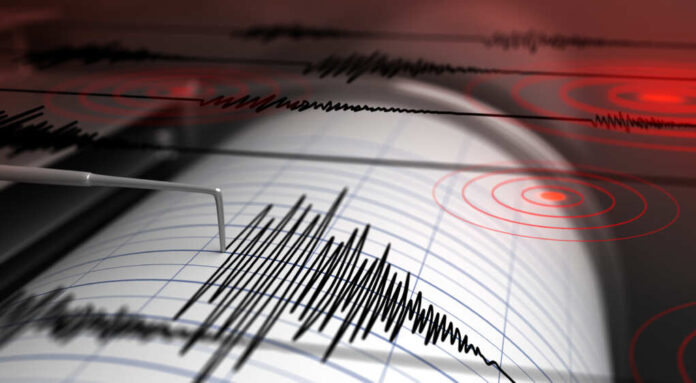
Space debris is an escalating global hazard, yet the solution to real-time tracking has been found in an unexpected place: the Earth itself. Researchers have ingeniously repurposed global networks of seismometers—instruments typically used for detecting earthquakes—to monitor space junk reentering the atmosphere. By capturing the powerful sonic booms produced during a reentry event, this innovative method provides a level of precision and immediacy that surpasses traditional radar, marking a significant breakthrough for global space situational awareness and safety.
Story Snapshot
- Researchers use seismometers to track space debris by detecting sonic booms.
- This method provides real-time tracking, surpassing radar limitations.
- The 2024 Shenzhou reentry validated this approach with seismic data.
- Integration of seismic networks could revolutionize space safety.
Tracking Space Debris with Earthquake Sensors
Researchers have ingeniously adapted global networks of seismometers, initially designed for earthquake detection, to monitor space debris reentering Earth’s atmosphere. By capturing the sonic booms produced during reentry, this method allows for real-time mapping of debris trajectory, speed, descent angle, and fragmentation. This development addresses significant gaps in radar and optical tracking, offering a more comprehensive solution to space situational awareness.
Scientists Use Earthquake Detectors to Track Space Junk Falling to Earth – YouTube
The innovative application was successfully demonstrated with the April 2, 2024, reentry of the Shenzhou spacecraft module. Seismic data from 127 sensors in California and Nevada captured its sonic boom, revealing an actual path that deviated from predictions. This highlights the method’s capability to provide accurate data where traditional models failed, marking a significant advancement in tracking uncontrolled reentries.
#Gravitas | Sonic booms can protect Earth from dangerous space debris
As seismic waves from collisions can reveal where the space junk crash-lands@ShreyaOpines has more on this pic.twitter.com/nU3ivmDThJ
— WION (@WIONews) January 23, 2026
Implications for Space Safety
The use of earthquake sensors for tracking space debris represents a cost-effective and efficient solution to enhance space safety. The integration of these sensors could reduce the time needed to locate debris from days or weeks to mere minutes or hours. This advancement not only improves emergency response but also aids in mitigating potential hazards from toxic fragments impacting populated areas.
As space traffic continues to grow, the importance of reliable debris tracking becomes paramount. The seismic method’s ability to provide precise data at Mach 25-30 speeds is unmatched by existing technologies. This breakthrough is poised to revolutionize how space agencies manage the risks associated with uncontrolled reentries.
Future Developments and Global Reach
While the technique has proven effective in the United States, plans to integrate acoustic sensors aim to expand its global reach. Researchers anticipate that this would enhance international collaboration and provide comprehensive coverage for space debris monitoring worldwide. Such advancements could significantly influence policy changes and drive international efforts toward sustainable space exploration and debris mitigation.
Despite its promising results, the method is not without limitations. It currently focuses on post-reentry tracking rather than predictive capabilities. However, its potential for real-time precision in tracking makes it a vital tool for addressing the growing challenge of space debris.
Watch the report: Earthquake Sensors Track SPACE JUNK Falling to Earth
Sources:
Earthquake Detectors Track Space Debris
Earthquake sensors can hear space junk falling to Earth | ScienceDaily.
Phys.org: Seismometer Networks Track Space Junk
Space.com: Earthquake Sensors Can Track Space Junk
ScienceAlert: Earthquake Sensors Detect Sonic Booms