
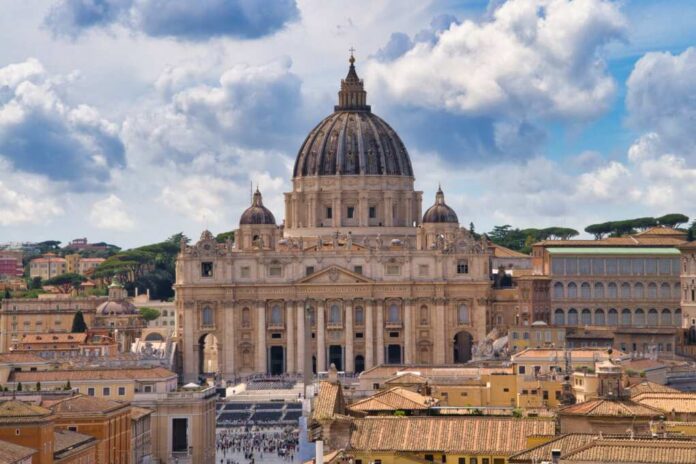
The Vatican’s latest divestment push against mining operations raises serious questions about whether environmental activism now trumps American energy independence and the mineral resources critical for manufacturing, defense, and the very technologies needed for the green energy transition Church leaders claim to champion.
Story Highlights
- Vatican convened 40 faith-based organizations in Rome to demand divestment from mining industry, citing harm to poor communities
- Catholic Church leaders urge moving investments from mining to “ethical alternatives” despite mineral dependence for energy and defense
- Initiative targets $15 billion in Catholic institutional assets while overlooking mining’s role in poverty reduction and American economic security
- Divestment campaign arrives as lithium, copper, and rare earth mining face intense demand for electric vehicles and renewable energy infrastructure
Vatican Targets American Mining Industry
The Vatican Dicastery for Promoting Integral Human Development hosted approximately 40 faith-based organizations in Rome from March 19-21, 2026, launching the Platform for Divestment in the Mining Industry. Church officials publicly endorsed the initiative on March 20, calling on Catholic investment funds and institutions to withdraw financial support from mining operations worldwide. The campaign frames mining as exploitation enriching corporate interests while devastating poor communities through water contamination and displacement. This direct targeting of an entire industry sector marks an escalation beyond previous Vatican environmental statements, potentially affecting billions in Catholic institutional portfolios.
Energy Security Concerns Ignored in Divestment Push
The timing of this divestment campaign collides directly with America’s critical mineral needs. Lithium, copper, cobalt, and rare earth elements extracted through mining operations power the electric vehicle batteries, wind turbines, and solar panels that environmental advocates demand. Defense contractors require these same materials for advanced weapons systems, satellite communications, and military hardware essential to national security. By pressuring Catholic institutions controlling an estimated $15 billion in divestment-pledged assets to abandon mining investments, Vatican officials risk undermining the supply chains that keep American industry competitive and our military equipped. The campaign provides no alternative source for minerals beyond vague references to “ethical fields.”
Working Families Bear Cost of Virtue Signaling
Mining-dependent communities across America, from Arizona copper towns to Wyoming rare earth operations, face economic devastation if major investors follow Vatican guidance. Thousands of blue-collar workers earning family-supporting wages in extraction industries stand to lose livelihoods as capital flees the sector. The Vatican’s moral framing ignores mining’s documented role in lifting developing nations from poverty through employment, infrastructure investment, and resource revenues. Catholic leaders in Rome face no personal consequence from mine closures that bankrupt American towns already battered by inflation and energy costs. This disconnect between elite institutional activism and working-class reality reflects the same globalist thinking that prioritizes abstract environmental goals over tangible human flourishing.
Questionable Theology Drives Economic Policy
The divestment initiative builds on Pope Francis’s 2015 Laudato Si’ encyclical and subsequent Vatican environmental activism that critics argue elevates ecological concerns above traditional Catholic priorities of evangelization and spiritual welfare. While sources do not explicitly mention Pachamama, the controversial Andean earth deity displayed during the 2019 Amazon Synod, the philosophical continuity linking indigenous earth worship to anti-mining activism troubles conservative Catholics who view natural resources as divine gifts meant for responsible human use. Church teaching historically affirmed man’s dominion over creation and the legitimacy of resource extraction to meet human needs. The current Vatican approach appears more aligned with radical environmentalism than centuries of Catholic social doctrine balancing stewardship with development. American Catholics funding their parishes and dioceses deserve clarity on whether their contributions support faith formation or political campaigns against industries employing their neighbors.
Vatican Urges Halt to Mining – A sin against Pachamama https://t.co/zVBZ8Q62Zw
— LifeSiteNews (@LifeSite) March 25, 2026
The Vatican’s mining divestment campaign arrives as Americans grapple with a protracted Iran conflict, soaring energy prices, and broken promises about avoiding foreign entanglements. Adding institutional pressure against domestic resource extraction compounds economic strain on families already questioning leadership priorities. Conservative Catholics watching their Church hierarchy advocate policies that threaten American jobs and energy security face a credibility crisis. When religious institutions wade into complex economic policy without accounting for national security implications or working-class livelihoods, they risk alienating the faithful who expected spiritual guidance rather than globalist activism. The mineral resources beneath American soil represent strategic assets and economic opportunity that no amount of virtue signaling from Rome should compel us to abandon.
Sources:
Vatican Urges Catholic Organizations to Divest From Mining Sector for the Common Good
Vatican calls for divesting from mining, citing harm to poor communities
Vatican Calls on Churches to Divest from Mining
Vatican endorses divestment from mining industry