
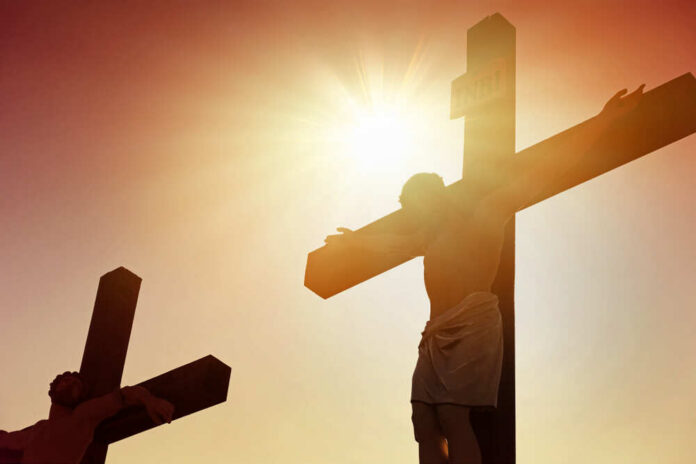
Jesus Christ’s crucifixion stands as the ultimate triumph over tyranny, reminding conservatives today of the enduring fight against corrupt power that erodes individual liberty and faith.
Story Highlights
- Brutal Roman execution method designed for maximum humiliation and suffering, confirmed by historical and archaeological evidence.
- Pontius Pilate sentenced Jesus despite finding no fault, yielding to pressure from Jewish leaders and a mob to preserve order.
- Scourging with flesh-tearing whips preceded nailing through wrists and feet, leading to death by asphyxiation and blood loss.
- Event birthed Christianity, transforming a tool of Roman oppression into a global symbol of redemption and sacrifice.
The Gruesome Reality of Roman Crucifixion
Roman soldiers arrested Jesus in the Garden of Gethsemane after Judas’s betrayal. Jewish authorities conducted initial trials overnight, lacking authority to execute. Pontius Pilate, the Roman governor, interrogated Jesus and found no crime but ordered scourging to appease the crowd. Soldiers used a flagrum whip embedded with iron balls and sheep bones, ripping flesh from Jesus’s back and front. This caused massive blood loss and set the stage for crucifixion, a punishment reserved for slaves and rebels.
Trial and Sentencing Under Political Pressure
Pilate sent Jesus to Herod Antipas, who mocked him and returned him without charge. Pilate then authorized the crucifixion despite declaring Jesus innocent three times. Jewish chief priests urged the mob to demand his death, fearing loss of religious authority under Roman rule. Soldiers crowned Jesus with thorns, draped him in a purple robe, and beat him before forcing the march to Calvary. There, they stripped him naked, nailed his wrists to the crossbeam for weight support, and his feet to the upright post.
Execution and Immediate Aftermath
On Calvary, known as Golgotha, Roman soldiers raised the cross around midday. Jesus hung for hours, suffering asphyxiation as he could no longer lift his body to breathe. Death came that afternoon, marked by Gospel accounts of the temple curtain tearing, an earthquake, and opened tombs. Two thieves crucified alongside highlighted Jesus’s innocence; one repented. Archaeology confirms details like heel fractures from nails and wrist nailing over palms for structural support.
Josephus described crucifixion as the most wretched death, emphasizing public humiliation through nudity and prolonged agony. Modern forensics align with Gospel narratives on the whip’s brutality and primary causes of death.
Historical Context and Lasting Legacy
Crucifixion originated with ancient Persians and Carthaginians, perfected by Romans for deterrence. In first-century Judea under occupation, Pilate’s Praetorium served as trial site, Calvary as execution ground. Jesus’s ministry challenged corrupt temple practices and defended outsiders, provoking leaders. Long-term, his death founded Christianity, sacralized the cross, and shifted views on suffering. Billions now see it as divine atonement, influencing art, medicine, and the abolition of the practice.
Sources:
The Most Gruesome Details of the Crucifixion of Jesus
PubMed on heel injuries in crucifixions
Crucifixion: The Cruelty of the Cross