Search crews found a debris field off Nantucket after a Bermuda-to-Boston medical flight vanished with six people aboard, and the hunt has now shifted toward the ocean floor.
Story Snapshot
- U.S. Coast Guard is searching by air and sea off Nantucket for a missing medical jet.
- Federal Aviation Administration (FAA) first reported losing contact with the Gulfstream G100.
- The aircraft was a Latitude Air Ambulance medical transport from Bermuda to Boston.
- A debris field tied to the flight was found; six people were on board.
What Authorities Say About The Missing Flight
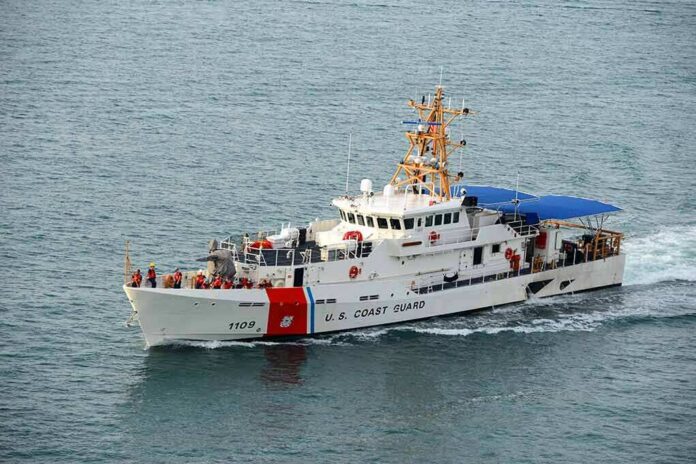
The U.S. Coast Guard said crews were searching off Nantucket after the Federal Aviation Administration reported losing contact with a medical transport jet early Saturday. Officials identified the aircraft as a Gulfstream G100 operated by Latitude Air Ambulance, based in Hamilton, Ontario. The flight departed Bermuda for Boston and lost contact near Nantucket, Massachusetts. Reports place six people on board, including medical crew and passengers. Coast Guard aircraft and boats have focused on the last known track area.
The search has used planes, helicopters, and surface vessels to scan a defined box off the island. Coverage describes a search area spanning tens of nautical miles as crews widened patterns based on currents and wind. Responders said they are working from the last known position and flight path details provided by aviation authorities. Coast Guard updates emphasized active operations in the air and on the water as daylight improved visibility over open ocean.
Debris Field Found Off Nantucket
Later reporting said crews located a debris field off Nantucket and tied it to the missing aircraft. Recovery teams continued to look for those aboard as they marked and mapped floating pieces. Officials have not released a final account of survivability or cause. The focus now includes narrowing the likely impact point to task sonar and remote vehicles. That step would allow a closer look at the ocean floor for larger wreckage and flight recorders if installed.
Outlets consistently state the jet carried six people on the Bermuda-to-Boston run when contact was lost. Some reports differ on the exact time of loss of contact, but the location focus remains off Nantucket. The medical operator and multiple media accounts identified the plane as a Latitude Air Ambulance Gulfstream G100. Flight-tracking services were cited for altitude and position trends, but detailed raw data has not been released publicly in full.
How Rescuers Build A Search At Sea
Search leaders often begin with the last radar return, the reported route, and expected performance to shape patterns. When a transponder or electrical system fails, responders lose precision and must sweep a larger area. Drift from wind and currents can move floating debris miles from the impact point, which complicates recovery. These challenges are common in missing-aircraft cases and guide the decision to widen the search box as hours pass without visual confirmation.
Rescue coordination centers use aviation and ocean data to refine the plan. Analysts blend radar history, aircraft speed, and direction to focus flights and ships. The goal is to find survivors fast, then preserve evidence for investigators. Once surface clues confirm a likely site, crews mark coordinates and prepare for underwater work. That progression, from broad search to mapped debris to seabed scans, has defined past ocean recoveries after aircraft disappearances near coasts.
Why This Hits A Nerve Beyond Aviation
Families count on fast medical transport to get care across borders and oceans. When a life-flight goes missing close to home, it feels like a system failure. People across the political spectrum already worry that leaders and agencies do not move with urgency when stakes are high. A visible, coordinated search can help rebuild trust. Clear updates from the Coast Guard and aviation agencies matter now, because accurate facts guide hope, planning, and later accountability.
U.S. ///
The Coast Guard is searching for six people after an air ambulance vanished between Bermuda and Boston.
Debris from the plane was found off Nantucket. The jet had plunged thousands of feet after its pilot reported electrical problems and declared an emergency.
— WireDesk (@wwiredesk) October 4, 2026
Both conservatives and liberals share a basic test here: get answers and do it right. That means finding the people on board, mapping the debris, and protecting evidence. It also means releasing a solid timeline and records when the search allows. Step by step transparency—what was reported, when, and how crews responded—can show a system that still works for the public, even when nature, machines, and time work against it.
Sources:
military.com, aljazeera.com, npr.org, boston.com, cnn.com, globalnews.ca