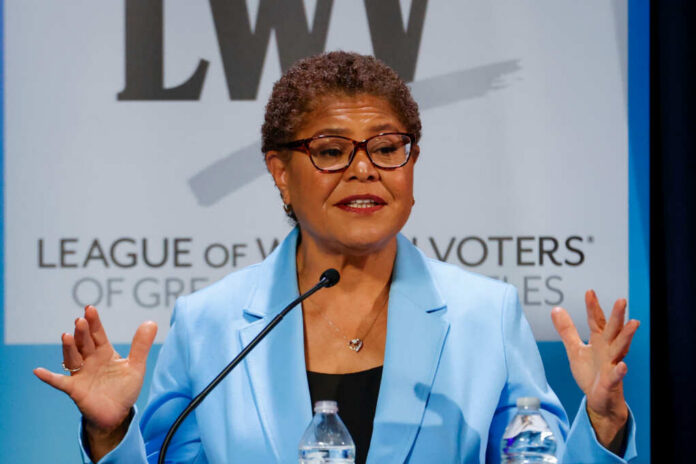
Los Angeles taxpayers have squandered $300 million on Mayor Karen Bass’ homeless program, with 40% of participants—roughly 2,300 people—returning to the streets, exposing the failure of big-government spending.
Story Highlights
- Inside Safe program spent $300 million to house 5,800 people since December 2022, but 40% returned to unsheltered homelessness by December 2025.
- Only 25% achieved permanent housing; returns worsened from 20% in 2023 to over 30% mid-2025 and 40% by year-end.
- Venice Beach encampments reemerged in 2026 despite initial clearances, frustrating local residents and businesses.
- Bass defends the effort but admits need to study why people leave, as temporary housing fails to deliver lasting results.
Program Launch and Rising Failures
Mayor Karen Bass launched Inside Safe in December 2022 through an executive order, targeting high-visibility encampments for interim hotel and motel housing. The plan aimed for permanent placement within 90 days, with a maximum stay of six months. Los Angeles Homeless Services Authority (LAHSA) dashboards tracked outcomes. By end of 2023, about 20% of participants returned to streets. Mid-2025 marked over 30% returns. December 2025 data showed 40%—2,300 of 5,800—back unsheltered, including evictions, voluntary exits, or those who disappeared from the system.
Stakeholders and Defenses
LAHSA provides monthly dashboards revealing the trends, while the City of Los Angeles funds the $300 million effort. Bass, the program architect, told the Los Angeles Times it’s crucial to learn why people leave, framing data as a learning tool. Local communities like Venice residents and businesses push for sustained clearances after initial successes housed over 100. Yet, encampments returned there by early 2026, three years post-clearance. Interests align on visibility but clash on permanent metrics versus temporary stays.
Power dynamics place Bass in control of funds and LAHSA operations. Media analyses like the LA Times highlight worsening recidivism despite scaling up. This underscores limited government advocates’ warnings against unchecked spending without accountability, echoing frustrations with fiscal mismanagement that burdens taxpayers.
Impacts on Taxpayers and Communities
Short-term, Inside Safe reduces encampment visibility temporarily, but high turnover strains city resources after $300 million outlay. Long-term, it raises doubts on scalability, favoring prevention models seen elsewhere in California. Affected parties include the 2,300 returnees, frustrated Venice stakeholders facing re-encampments, and taxpayers footing repeated bills. Economic erosion builds distrust in government efficacy; socially, it perpetuates cycles amid mental health and substance issues driving LA’s crisis of 45,000 unsheltered in 2025.
Politically, mid-term pressure mounts on Bass as her term nears end in 2026. Broader effects spotlight interim housing limits versus prevention successes statewide. Only 25% reached permanent housing by late 2025, up from 15% in 2023, yet 55% count in some form including temporary. Optimists note citywide unsheltered drops of 17.5% year-over-year, but pessimists see 40% returns signaling instability. LA Times analysis questions the 90-day goal’s realism as trends deteriorate.
Sources:
The Independent: Los Angeles Inside Safe program analysis
Los Angeles Times: Under L.A. mayor’s $300-million homeless program, 40% have returned to street
ABC7: Notorious Venice homeless encampment returns 3 years after being cleared
City of Los Angeles: Inside Safe program page
LAist: A new homelessness strategy is sweeping California
LA County Homeless Initiative: Our Challenge